Meta Quest 3 Review (2026): Still the Best Mixed Reality Headset?
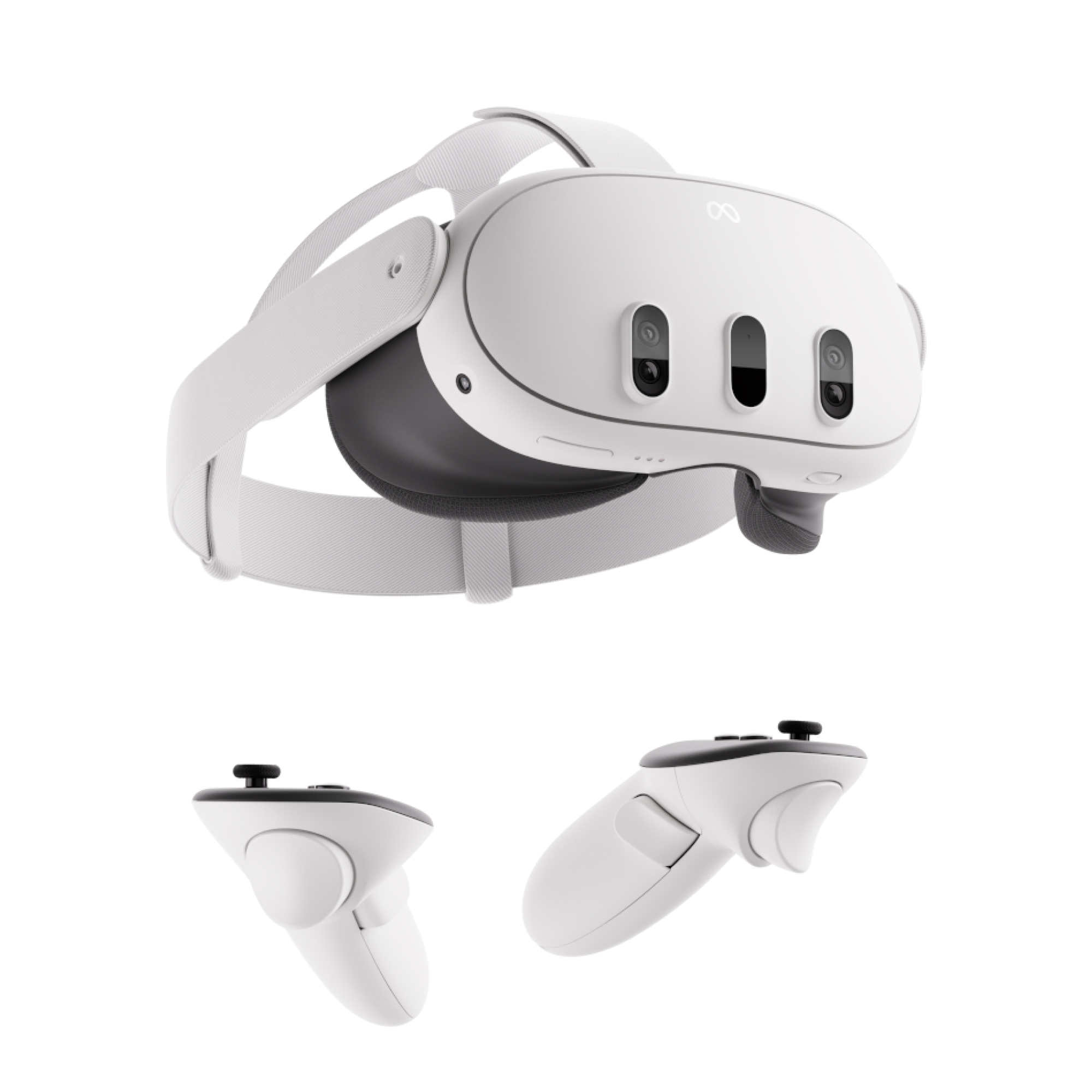
The Meta Quest 3 arrived with bold claims: 2x the GPU power, full-color mixed reality, and a sleeker design. After spending 30 days with both the 128GB and 512GB models — playing everything from Beat Saber to Asgard's Wrath 2 — here's our honest, detailed review.
First Impressions & Design
Right out of the box, the Quest 3 feels like a meaningful upgrade. Meta slimmed down the headset profile by 40% compared to the Quest 2. The new pancake lenses are immediately noticeable — the sweet spot is dramatically larger, meaning you don't need to adjust the headset as precisely to get a sharp image.
The three-sensor array on the front (two RGB cameras + depth sensor) enables full-color passthrough mixed reality. Unlike the Quest 2's grainy black-and-white passthrough, the Quest 3 lets you see your real environment in vibrant color with accurate depth perception.
Performance: Snapdragon XR2 Gen 2
The Snapdragon XR2 Gen 2 chip delivers more than double the GPU performance of the Quest 2's XR2 Gen 1. In practice, this translates to:
- Higher resolution textures in standalone games
- Smoother frame rates (up to 120Hz refresh rate)
- Faster app loading times (2-3x faster than Quest 2)
- Improved mixed reality experiences with real-time environment meshing
Games like Red Matter 2 now run at near-PCVR quality entirely on the headset. The difference is genuinely impressive.
Mixed Reality: The Real Game-Changer
Mixed reality is where the Quest 3 shines. Using the depth sensor and improved cameras, the headset maps your room in 3D, allowing virtual objects to interact with real surfaces. We tested several MR experiences:
First Encounters: Little furry aliens burst through your actual walls. It's a fantastic demo of the technology and never gets old when showing friends.
PianoVision: Virtual piano keys overlay on any flat surface. The hand tracking is responsive enough that you can actually learn to play.
Virtual Desktop: Working in MR with floating monitors while still seeing your keyboard and coffee cup is surprisingly productive.
Display & Optics
The dual 2064 x 2208 per-eye LCD panels deliver a sharp 25 PPD (pixels per degree) — a 30% improvement over the Quest 2. Combined with the pancake lenses, the visual experience is crisp edge-to-edge with significantly reduced god rays and glare.
The 110-degree horizontal FOV (up from ~90 on Quest 2) makes a noticeable difference in immersion. It's not quite Valve Index territory, but it's a welcome improvement.
Controllers: Touch Plus
Meta dropped the tracking rings, and the result is a much more compact controller. Inside-out tracking via the headset's cameras works flawlessly in our testing. The TruTouch haptics are improved, with more nuanced feedback in supported games.
Hand tracking has also improved significantly — it's now usable for navigation and casual apps, though it still can't replace controllers for gaming.
Battery Life
This remains the Quest 3's weakest point. Expect 2-2.5 hours of gameplay on a full charge — similar to the Quest 2. The included 18W charger takes about 2 hours for a full charge. For extended sessions, we recommend:
- The Elite Strap with Battery ($129) for an extra 2 hours
- A 10,000mAh power bank in your pocket with a long USB-C cable
Content Library
The Quest platform has the strongest standalone VR library by far. Backward compatibility means all Quest 2 games work on Quest 3, with many receiving free updates for higher resolution and frame rates. Notable exclusives and updates include:
- Asgard's Wrath 2 (bundled with 512GB model)
- Assassin's Creed Nexus VR
- Red Matter 2 (with Quest 3 enhancements)
- Stranger Things VR
✅ Pros
- Excellent mixed reality with color passthrough
- 2x GPU performance over Quest 2
- Pancake lenses with large sweet spot
- Slimmer, more comfortable design
- Full Quest 2 backward compatibility
- Improved hand tracking
❌ Cons
- Battery life still only 2-2.5 hours
- $499 starting price ($200 more than Quest 2)
- Default strap still mediocre
- No eye tracking
- Charging dock sold separately
Our Verdict
The Meta Quest 3 is the best standalone VR headset you can buy in 2026. The leap in performance, the genuinely useful mixed reality features, and the improved comfort make it a worthy upgrade from the Quest 2 — especially if you're excited about MR experiences.
Who should buy: VR enthusiasts looking for the best standalone experience, mixed reality early adopters, anyone still on Quest 1 or considering their first VR headset.
Who should wait: Quest 2 owners who primarily play seated games and don't care about mixed reality. The Quest 2 remains a capable headset at a lower price.
Frequently Asked Questions
Is Quest 3 worth upgrading from Quest 2?
If you play VR regularly and have the budget, yes — the visual upgrade and mixed reality features are significant. If you're a casual user, the Quest 2 is still perfectly adequate.
128GB vs 512GB: which should I buy?
Most users will be fine with the 128GB model — games average 5-15GB each. The 512GB model makes sense if you plan to store lots of media or install many large games simultaneously. It also includes Asgard's Wrath 2 ($60 value).
Does it work with PC VR?
Yes, via Link Cable or wireless Air Link at up to 960 Mbps. It also supports Steam Link and Virtual Desktop for wireless PC VR streaming.